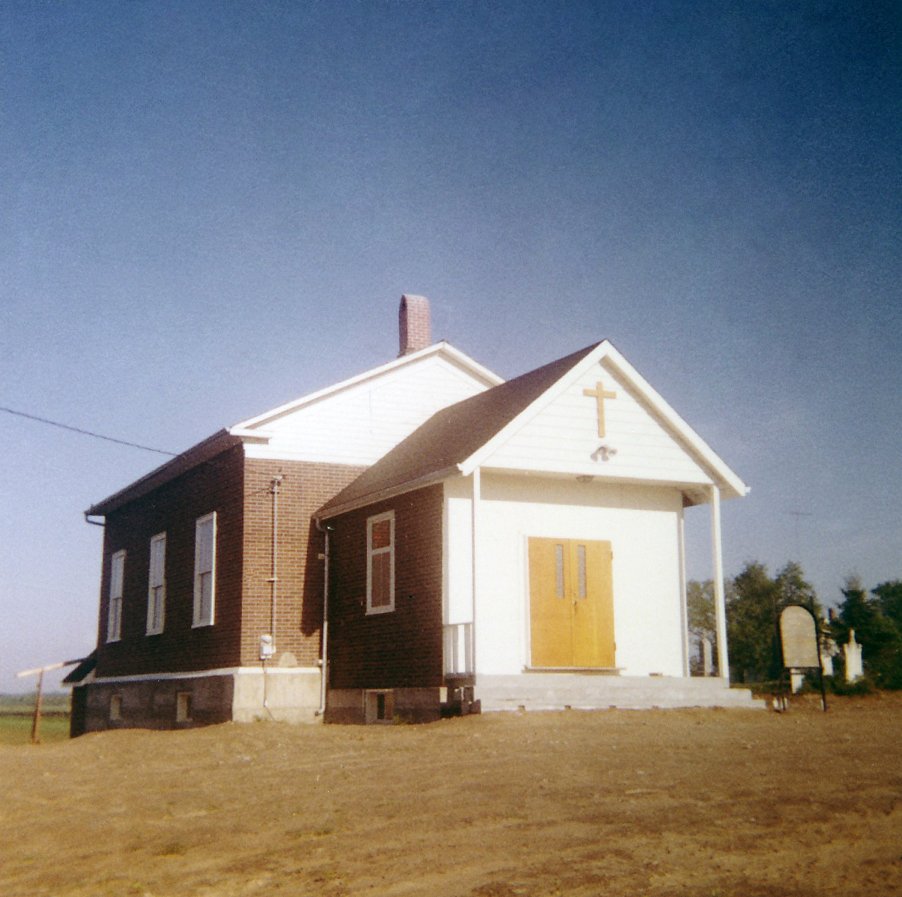
Armadale Free Methodist Church was designated a heritage property in 1985.
Shortly after visiting Armadale in February of 2020, I witnessed the world coming unhinged from the ravages of Covid.
The virus restricted the progress of the church book. Interviews were halted as people were discouraged from meeting face to face. I could assemble parts of the book in lonely rooms but that was the extent of my organizing. The book’s publication was delayed.
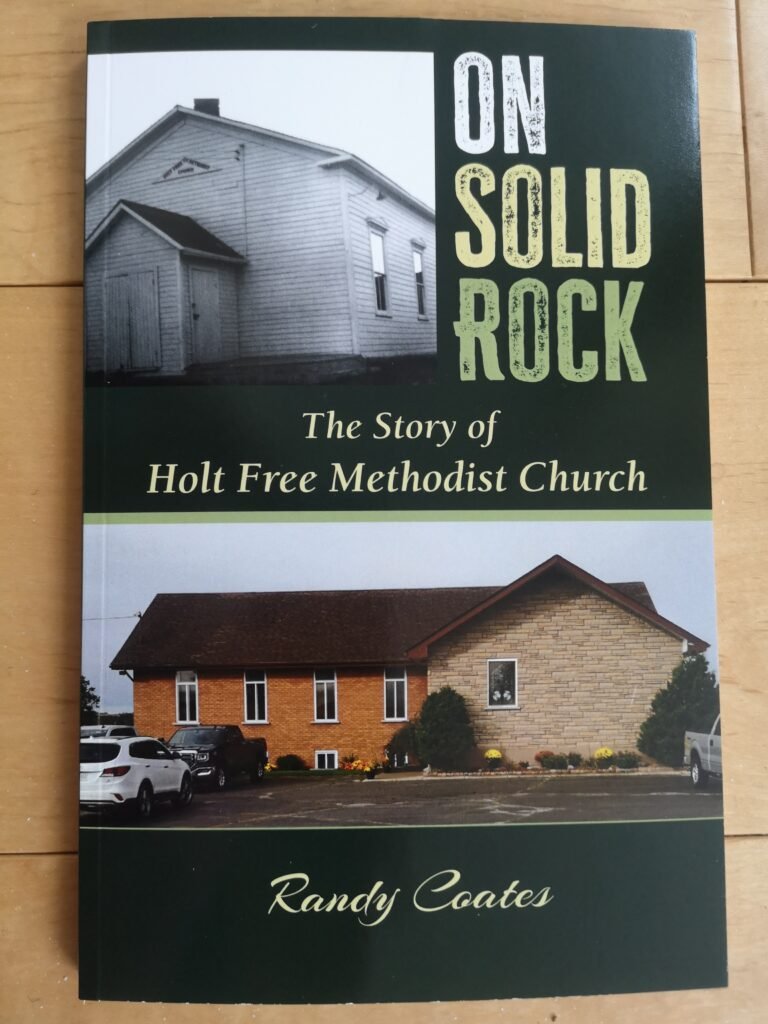
Finally, on April 30, 2025, On Solid Rock: The Story of Holt Free Methodist Church was officially published. I had started working on it in June 2017. So it took me eight years. To some authors, that is not unusual.
A description of the book is on this website.
Although I paid for the services of the publishing company, I decided that all proceeds would go to Holt Free Methodist Church.
The congregation of the church continues to decrease as church elders die off. If, one day, the church cannot reach its past glory, I hope that this book, in some way, captures the spirit and history of the institution.
When I was a child, my family attended a Free Methodist church north of Toronto. We considered ourselves Christians with a few flaws. None criminal.
When I moved to Toronto to pursue my teaching career, I did not associate with the church as much due to the distance between us. Occasionally, I would rent a car and go visit my parents on a weekend. We’d take some time on Sunday to go to the church.
Over the years, much has changed. My parents died three years ago and since Covid, the church now presents its services via Zoom. So there is no excuse that I cannot “attend” services.
Around ten years ago, I was in person at one of the services, listening to one of the parishioners talk about past ceremonies, one in which the women of the church wore frilly hats to an Easter event.
One of our long-term members, an anchor in the church, had kept records of the church since its birth in 1909. Although her notes were precise, they were typed on loose paper which was becoming worn.
I decided that my next self-published book would be a history of our church. I would research diligently, perusing the notes, interviewing members of the church, finding out what was happening in the community from the early days on.
It was a sad undertaking because, by the time I published the book, some of the people interviewed had passed away.
Still, the book got published by Volumes Publishing, the same company that had published Remembering Clare (see the blog from March 15, 2026).
In November 2019, I approached the pastor who gave me some background on the origins of Free Methodism. One of the nuggets of information he presented to me is that the first Free Methodist Church in Canada is still standing: the Armadale Church in Scarborough, established in 1880.
On February 9, 2020, I decided to visit this church. The pastor, who had been there since 2001, greeted me at the door. I had given him a heads-up that I was coming.
The church was smaller than I expected. The pews were shorter and smaller than the ones at my church. A large person would have trouble fitting into one. The roof had a leak and needed to be fixed. The estimate for repair was close to $10,000.
The congregation was tiny. I ran into three sisters whose dad had been a pastor at my church years ago.
The service was much like the one at my church: hyms sung, announcements made, collection taken, prayers requested, and a message.
Alas, I failed to sell any of my books at the CANSCAIP meeting. This disappointed me because we writers talk about supporting each other.
I provided free bookmarks so perhaps someone took one of these away and handed it to someone who might be interested in the book.
I haven’t received any royalties in the last six years so I guess not.
I consider this novel the 2nd best, behind PR, that I’ve written.
This underlines the frustration of authors who bleed so much into their work and it often goes unappreciated.
Still, the sign of an avid writer is perseverance.
Life has a strange way of moving in circles. This past March 26, I attended a book launch for The Water You’re Swimming in by Rachel Schwartz Fagan. I decided in 2025 to attend more book launches not only because I knew many of the authors but also as a networking ploy. I learned that Rachel’s agent, Ali MacDonald, was one of the agents I had submitted my work to (See last blog). I had a brief conversation with her and reminded her of my past meeting. It was all in good fun. I am certainly not bitter that she chose not to represent me. As many authors will tell you, not every agent thinks your novel is trending.
On August 9, 2015, I decided to travel again to Isla Mujeres, partly because I love the place and partly to do research for a novel revision of SATS.
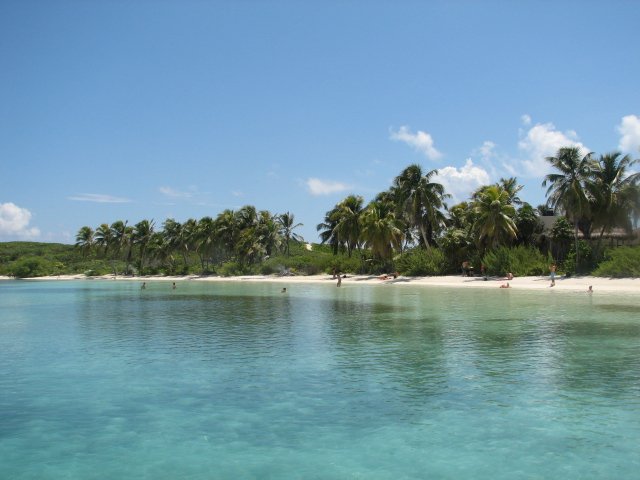
I repeated my excursion to Isla Contoy in order to study the island. To ensure that I made my scenes realistic in the novel. I went away, feeling that I had succeeded.
As with my previous novels, I sent SATS out to numerous publishing companies but it was turned down (one of my writing colleagues prefers this expression to rejected).
On August 20, 2016, I attended the Toronto Writing Workshop where an American writer gave the audience members pointers on how to get published. I’ve attended a long string of these workshops, my hope lurching when I think I can really take advantage of the advice the presenters give, only to be swept away in morass. Likewise with this one.
There were eleven agents from various companies and we had the opportunity to engage in a 10-minute meeting with any of them, pitching our book ideas. I chose two who I thought would be the best candidates to represent my children’s novel.
The first one seemed interested in my story and asked me to send her the ms. The other was more wary and said she wasn’t interested. One of the questions she asked me was truly puzzling: did I make my main character proactive or reactive? I can’t remember my response but I do remember thinking, Aren’t all characters reactive at some point?
I never heard back from the first agent but I did run into her at a book launch for a children’s author she represented. I reminded her of that meeting ten years previously and she asked me again what my book was about and asked again for me to send it to her.
Yeah, right.
My frustration manifested itself again. Lacking patience, I had SATS self-published with Baico Books in Ottawa. I thought it was a damned good book; couldn’t understand why publishing companies “turned it down.” But, alas, life is short.
As I did with my other books, I took copies of it on a trip to Mexico in July, 2018, and left one in my hotel.
My niece is an author who is traditionally published and she markets herself voraciously. I wondered if my lack of marketing was my downfall. So during one of the CANSCAIP (see my last blog) meetings, I chose another route. It was December 14, 2018, and the writers were invited to do a book spiel on their children’s books and then lay them out on the table in case anyone wished to buy them.
Shortly after publishing my middle grade children’s book (More Precious Than Rubies) in 2012, a good friend of mine gave me a membership gift for Christmas.
The membership was with an organization called CANSCAIP (Canadian Society of Children’s Authors, Illustrators, and Performers).
My friend figured that since I had written a children’s book then I would probably gain insights from fellow children’s authors.
Pre-Covid, the meetings took place in person. People gathered to promote their books but there would always be guest speakers who focused on a particular topic important to writers, illustrators, or performers (e.g., how to develop character). During and post-Covid, meetings have been online which has its benefits. Before, I was attending meetings in Toronto so only people who lived in Toronto or in the GTA could attend. With online meetings, people from all over Canada attend.
In July 2014, I had another idea for a children’s book, this time a YA (Young Adult) novel. Having taught in many schools and observing the idiosyncrasies of students, especially grade 7 and 8 students who I taught often, I thought about this concept:
A substitute teacher is trapped on a deserted island with one of his male students. It seems contrived but there is a lot more to how this situation comes to be.
The teacher has been a centre of attention in the school that the student attends. He keeps to himself and the students become curious about him. On the island, the student learns something about the teacher that he has hidden. Although the two do not bond, they do learn that everyone has private parts of their lives that aren’t always revealed to others.
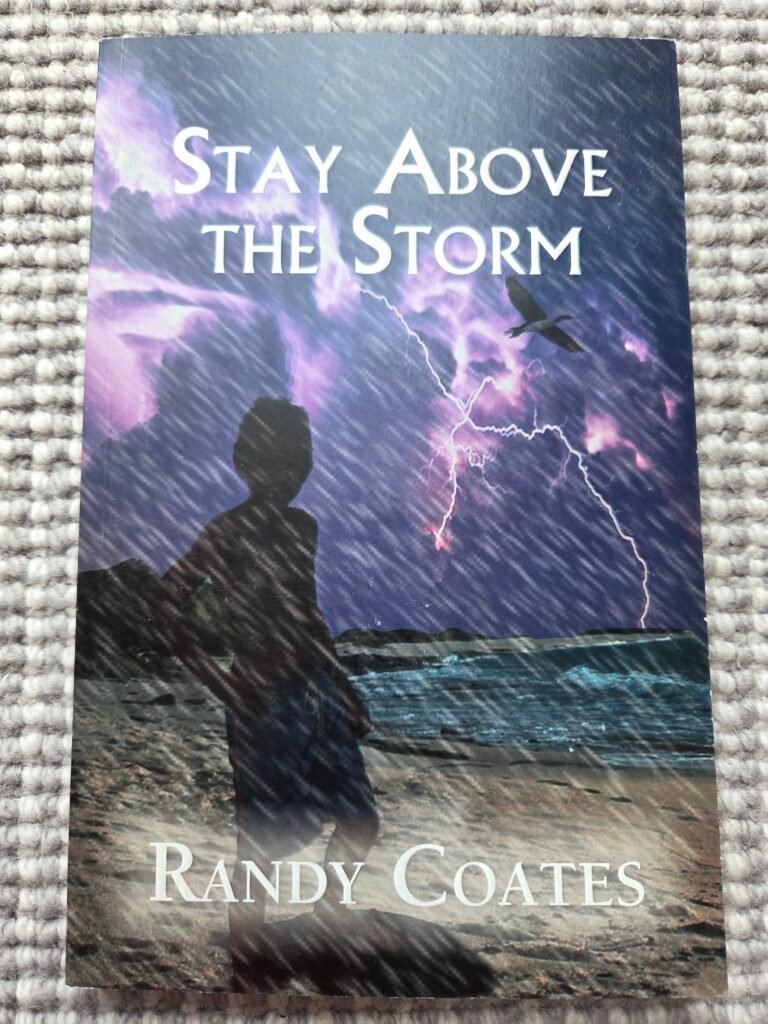
By July 2014, I began writing the novel. I called it Adrift for awhile, then found that another author had used this title. I chose Stay Above the Storm (If you read the blurb for the book, you will have a better understanding as to why I chose this).
The first half of the novel takes place in the student’s school and home. The second half takes place in Isla Mujeres, an island off the coast of Cancún, and the deserted island. I had travelled to Isla Mujeres in the past and had gone on a snorkelling cruise towards another island, Isla Contoy which is a bird sanctuary. Isla Contoy is uninhabited and only open to visitors who come and go from cruises. A perfect location for my two characters to be stranded on.
While I was in the process of self-publishing More Precious Than Rubies, I generated other ideas for future books.
The “good friend” mentioned in my blogs of December and January was a former teacher and mentor of mine. As far back as May 2012, I had considered writing about his life and his incredible effect on his high school students.
A lot transpired from 2012 to 2017 while I took on various writing projects. I spent a lot of time collecting data for the memoir of my friend. I had a lot of firsthand information since I travelled often with him. Although he had selections of his poetry published in Canadian anthologies and wrote book reviews for literary magazines, he was never regarded as a well-known Canadian author. Yet in 1973, he wrote a book entitled, The Neglected Genre: The Short Story in Canada.
In the early 70’s, he was an invaluable peer to up-and-coming and established writers such as Margaret Atwood, Irving Layton, Alden Nowlan, Joyce Carol Oates, and Miriam Waddington because he featured their poetry in anthologies. He was a force in the Canadian industry at a time when Canadian literature was often being overlooked.
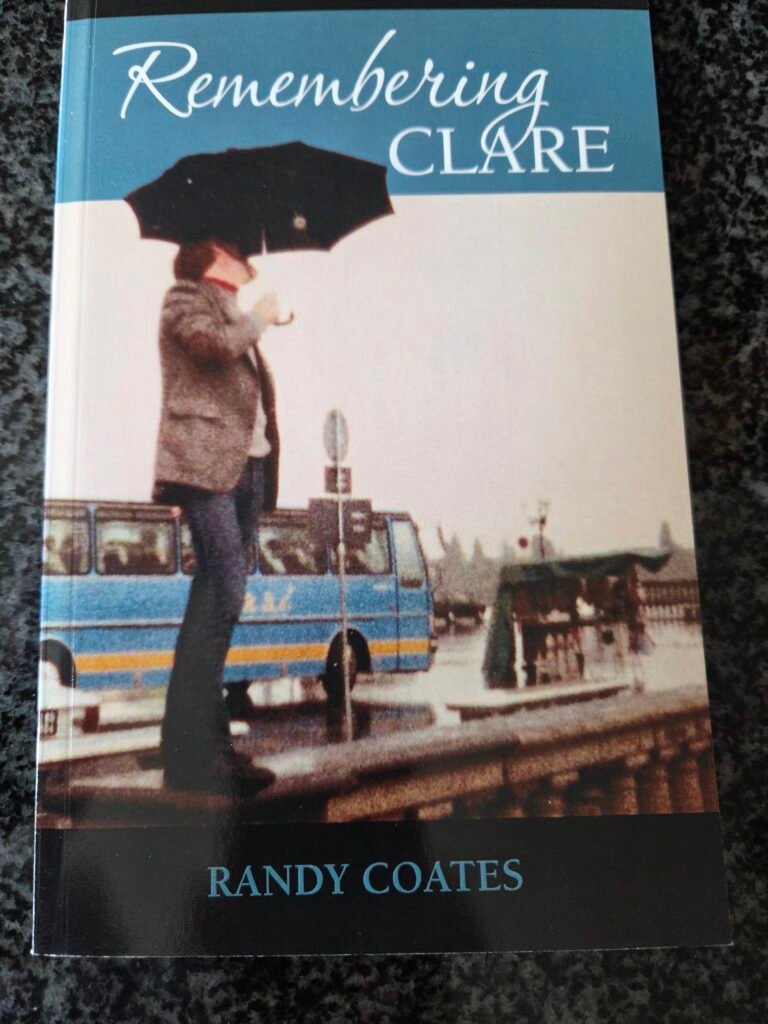
By 2017, I published a short book about his life and his influences. When we travelled to San Miguel de Allende (see previous blogs), we regularly visited our favourite restaurant, El Pegaso. The staff were used to seeing us at our corner table, soon to be labelled la oficina. In August 2017, I visited the town and dropped off a copy of the book, Remembering Clare, to the owners of the restaurant. They remembered us sitting together. In fact, the back cover of the book shows a photograph of my friend’s reflection in one of the restaurant’s windows.
I also distributed the book to some of his colleagues from The Oxford Tradition, a programme set up for North American students to take courses at Oxford University in the summers. My friend was chosen as one of the summer deans, an experience which he cherished until his unfortunate death on September 4, 2004.
Around the end of 2013, there was a special on David Suzuki’s The Nature of Things entitled Flight of the Butterflies, which featured Canadian icon, Gordon Pinsent.
I found it serendipitous that the programme followed the studies of Dr. Frederick Urquhart and his fascination with the migration of the monarch butterflies to Mexico. Pinsent played the role of Urquhart and I sent his agent a copy of The Monarchs to pass on to Pinsent. I included these words:
“I am sending you a book that I recently self-published. It is mainly fictitious; however, I did use the butterfly migration as a catalyst for the events of the novel.
Since you have a connection to Flight of the Butterflies, I thought that sending you my novel is the least I could do for such a respected Canadian icon as yourself.”
Whether he received it or not is another thing. I never heard anything back.
I wanted book reviewing companies to evaluate my newest foray into writing. I sought the opinion of Blueink again (See blog from Nov. 8, 2025). I received both positive comments such as “…offering a raw and sometimes painfully realistic book at how one paired-for-life couple handles their final years, months, and days together” and negative comments like, “One or two such scenes showing us the way cancer has made Robert’s life almost unlivable would be enough, but Coates revisits this theme so frequently and intensely that it overshadows the charming relationship between curmudgeonly Robert and his loyal, if frequently sarcastic, wife.”
I also received these upbeat words from the Clarion Review (See blog from Nov. 8, 2025): “Coates flawlessly combines their spoken and unspoken reflections and points of view, and what begins in jest…gradually takes on a deeper meaning.” The writer is referring to Robert and Sharon’s discussion about seeing the butterflies in Mexico.
In July 2014, I visited San Miguel de Allende and left one of my books at the Bed and Breakfast I normally stay at, the Villa Mirasol Hotel. I also left one at the Biblioteca Pública, the library, which has one of the biggest bilingual collections of books in Mexico.
When I returned from Mexico, I discovered another review of my book, this time from Kirkus Reviews. Again, I had to brace myself for some rather harsh words: “…Robert and Sharon’s social ideologies are jammed into the narrative at perplexing intervals simply to make what come across as half-baked points. Rants about…religion, and cultural differences between Mexico and Canada are unfocused and distracting.”
Jump ahead to Sept. 25, 2024. I paid a little less than $300 for a promotion of TM in Goodreads. Some very willing participants gave the book glowing reviews which were supposed to give me hope that people would read them and buy my book.
Alas, when I checked my royalties at iUniverse in December of 2024, I discovered that not a single, extra copy had sold.
Writers put out money to make money and rarely ever catch up.
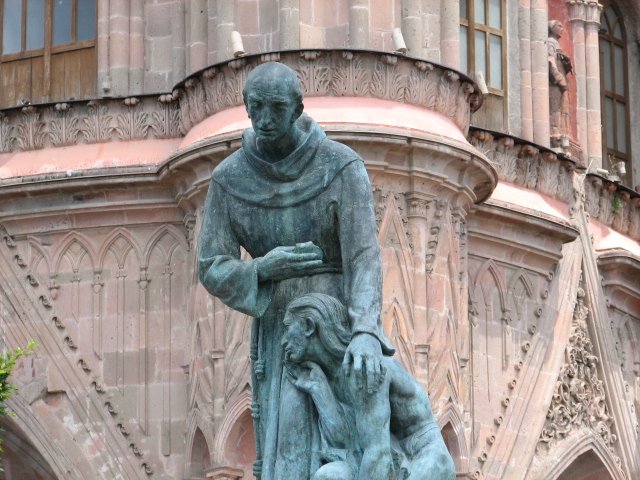
Below is a picture of Friar Juan, one of the founders of San Miguel de Allende.
The “good friend” I referred to in my last blog died tragically in September of 2004. It was a strange twist that added more poignancy to the novel which I had started thinking about in 2002.
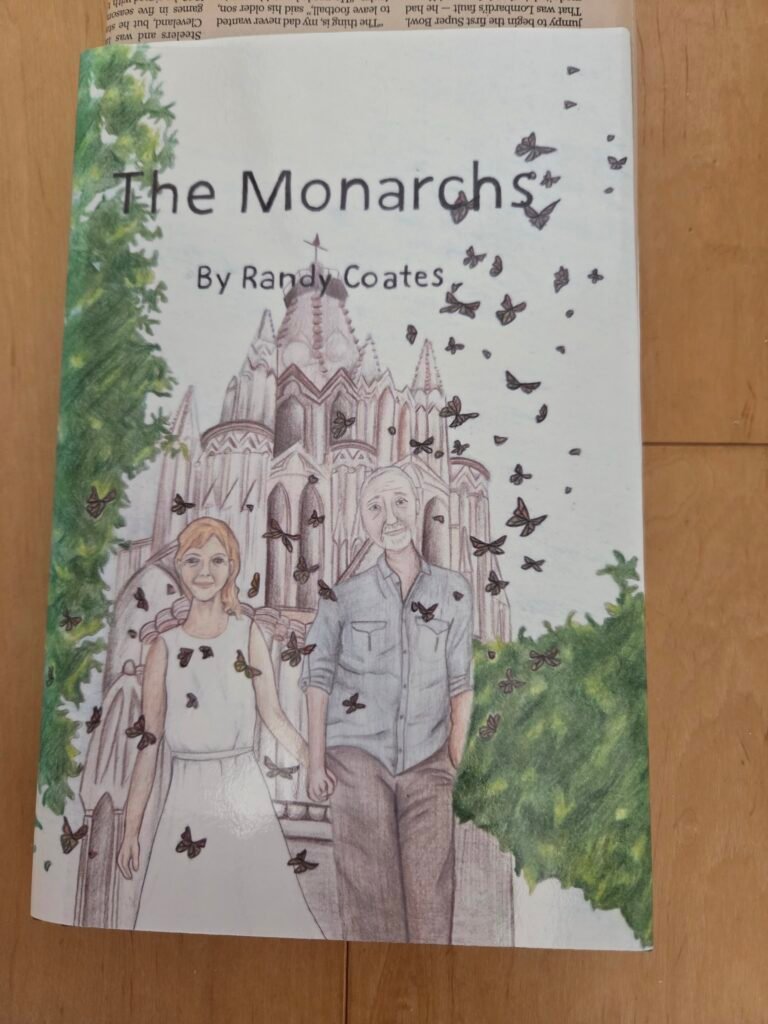
The novel still involved the relationship between a couple in their early sixties but I changed the title to The Monarchs since the two make pilgrimages to Mexico, resembling the migration of Monarch butterflies. The novel flows between the couple’s dreary existence in Canada and their more adventurous lifestyle in Mexico. Regardless of their escape to the Mexican landscape and culture, they cannot deny that Robert, the husband, is dealing with cancer.
My pursuit of information concerning cancer became intense and I decided to make Robert so depressed from the affliction that he contemplates assisted death. I sent a letter to the Hemlock Society which eventually had its name changed to End-of-Life Choices, asking if I could engage someone in conversation about the topic. I never received anything back. Even though I had cited the purpose of my novel, people in the organization might have suspected I was the one considering suicide.
Eventually, by March 27, 2005, I had completed the first draft of TM. In April, I began to send out queries to publishing companies to see if they were interested in publishing it. I approached about six companies, all of which turned down the prospect, and ran out of patience. I put the book aside and focused on other projects.
In July 2012, my failure at getting my work published caused me to consider self-publishing TM since I had done so with MPTR (see past blogs). I wished to use iUniverse again (see blog from Sept. 7, 2025). Also, I had an idea for what I wanted the front cover to look like and approached my niece about designing it.
Writing a novel takes time. Writing one over a long period poses its challenges. From the moment there was a germ of an idea in 2002 until 2012 when I sought iUniverse’s services, a lot had changed in the world. When I began writing TM, George W. Bush was the American president. There was a section in my book in which Robert and his wife, Sharon, discuss the U.S. presidency with some Republicans. By 2012, the president was Barack Obama. I revised this section. This is what occurs often when writing a novel. Political leaders change. Technology changes. World conflicts change. And, of course, sometimes they don’t.
My next venture into the world of self-publishing was inspired by a good friend who was going through some health struggles.
He and I travelled a lot together and I was usually the one to whom he confided when his pain was at its worst.
On a trip to San Miguel de Allende, one of our favourite travel spots, in December of 2002, he was not feeling well and he encouraged me to get out of the hotel room and walk around town. I saw that he wanted time to himself and did not want to keep me from enjoying the holiday.
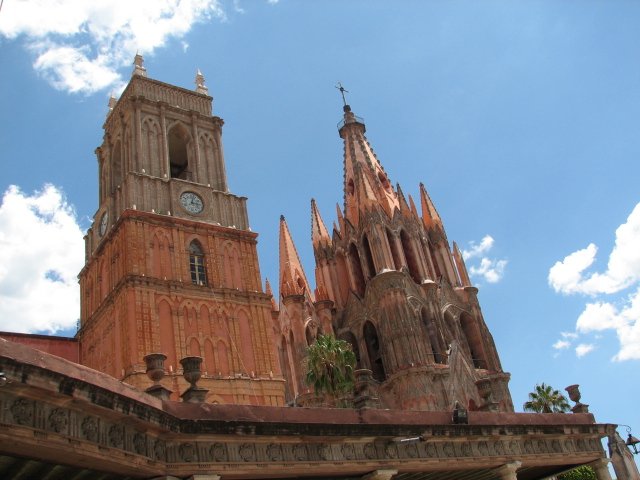
As I investigated the ornate churches in town, I thought of an idea for a novel. It involved a man and woman in their early sixties who are inseparable, who travel a lot, and who are dealing with the husband’s cancer. The working title then was Mariposa and Corazon.
I wanted a big part of the novel to be set in San Miguel since it was a special place for my friend and me and since I knew so much about its history and traditions.
As with much of my writing, I either lost interest in the concept or was distracted by other writing projects.
In April of 2003, I was called for jury duty. Knowing that I would be put in a crowded room with other potential jurors as we waited to find out if we would be chosen, I took some paper with me to exercise my writing. My first drafts are always in pen. Strangely, the idea for Mariposa and Corazon arose again. I began to write it.
By the way, on my second day of “jury duty,” all of us potential jurors were sent home at 1:00 and told that we weren’t needed. And wouldn’t be contacted again for at least three years.
The best part of it: my interest in M and C had been reignited.
I was anxious to expose the novel to the world. I continued to correspond with iUniverse (see blog from Sept. 7, 2025, paragraph 5). I paid that company more money in order to have the novel critiqued. The reviews were honest, sometimes brutal.
The first review was from a company called Blueink which savaged MPTR with statements like “…there’s very little action in the plot, and the most critical scenes – including the story’s climax – happen entirely offstage” and “this story requires major revisions to reach the standards of quality, excitement, and expanded mythology that are already available in the traditional marketplace.”
Ouch!
Peter Dabbene from the Clarion Review presented a more upbeat review: “Coates…captures the characters of Paul and Chad perfectly, with the budding independence and maturity appropriate to their age, as well as the uncertainty that accompanies a lack of experience” and “MPTR is an enjoyable, self-contained tale that will entertain young readers and bring an ancient myth to life.”
Kirkus Reviews offered a review that was somewhere in the middle of the other ones: “The initial mysteries surrounding the new school principal set the stage for a page-turning story and will pique readers’ interest” and “An intriguing tale, but one hampered by uneven characterization and a disappointing ending.”
Reviews can be unkind to a person and I limped away from them, broken but unsurprised. I knew from the moment that I finished MPTR that it lacked action.
On September 21, 2014, I attended another “Word on the Street” (see blog from Oct. 7, 2025). There was a downpour that day, preventing people from circulating among the booths, one of which had been rented by me. I ended up selling only four copies of MPTR. I did talk to some people, including a man who found out I was a teacher and who said, “Oh, then you make good money.” He decided not to purchase the book but I don’t think it had anything to do with my being a teacher.
On December 12, 2018, I attended the monthly meeting for Canscaip (“Canadian Society of Children’s Authors, Illustrators, and Performers”). It was their last one before Christmas and we writers were allowed to give an elevator pitch concerning our children’s books to see if anyone was interested in buying them as gifts. I delivered a blurb about MPTR. Sadly, no one bought it. But I did get to practice my social media skills which were becoming necessary in the twenty-first century.